Stone shape is one of the first decisions you'll make when designing a custom engagement ring, and one of the most personal. Unlike the 4Cs, which are about quality and value, shape is almost entirely about style. There's no "better" shape, only the one that fits your taste, your partner's style, and the overall design you have in mind.
Here's a breakdown of the most popular stone shapes, along with what makes each one distinct.
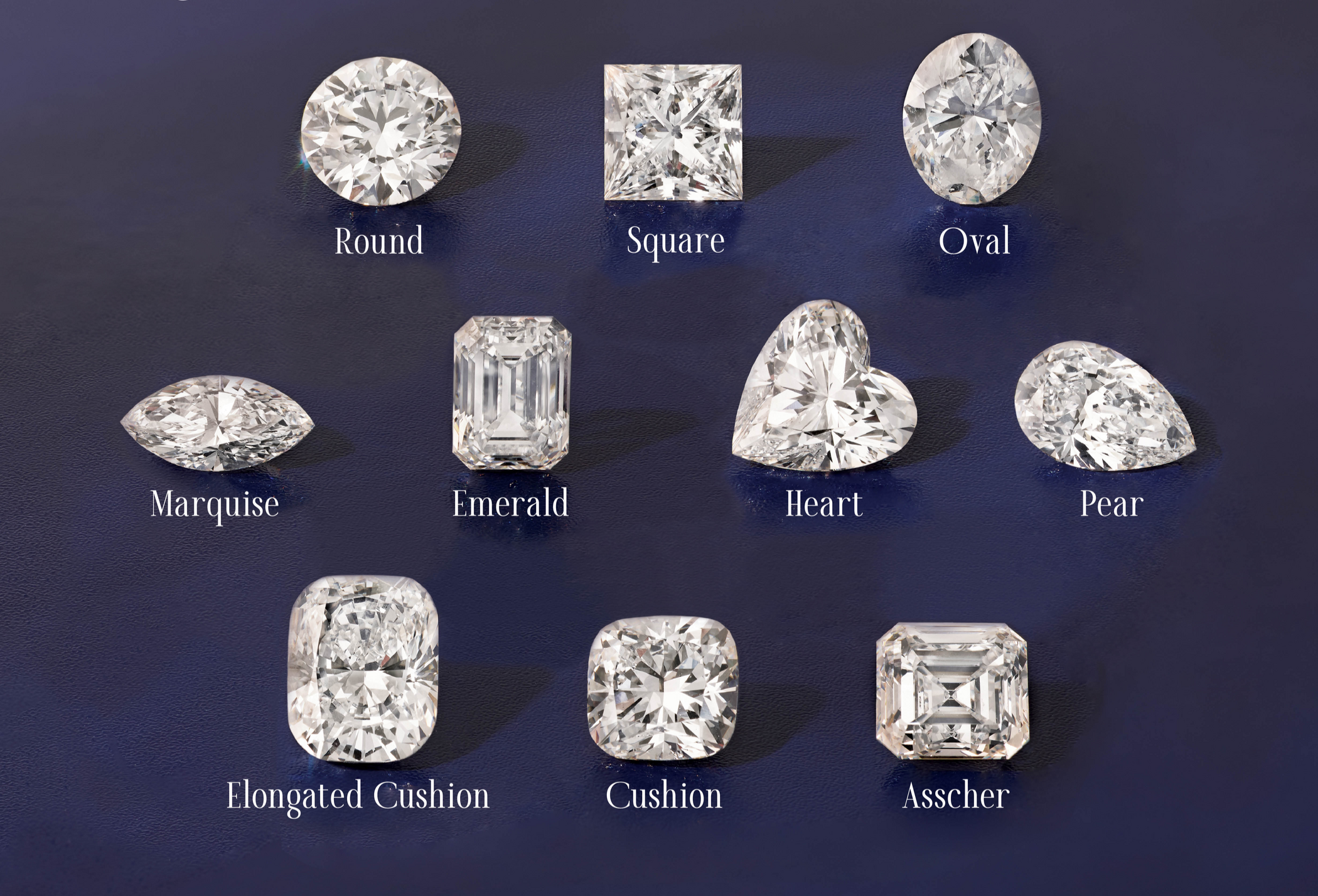
Some of the most common stone shapes range from the classic Round to the unique Marquise.
Round Brilliant
The round brilliant is the most popular diamond shape by a wide margin, and for good reason. Its 58-facet cut is specifically engineered to maximize brilliance and sparkle, more than any other shape. It's a timeless, classic choice that pairs well with nearly any setting style, from minimalist solitaires to elaborate halos.
Best for: Buyers who want maximum sparkle and a classic, versatile look.
Oval
Oval diamonds offer a similar brilliance to round stones but with an elongated silhouette that can make the stone appear larger and make fingers look longer and slimmer. Ovals have grown significantly in popularity in recent years thanks to their blend of classic sparkle and a slightly more distinctive shape.
Best for: Buyers who want brilliance and a bit of a modern edge, without straying too far from a traditional look.
Cushion
Cushion cut diamonds combine a square or rectangular shape with rounded corners, resembling a pillow (hence the name). They offer a soft, romantic look with strong brilliance, often described as having a vintage feel.
Best for: Buyers drawn to a vintage or romantic aesthetic with plenty of sparkle.
Princess
Princess cut diamonds have sharp, clean corners and a square shape, offering a modern, geometric look. They're the most popular fancy (non-round) shape, largely because they combine strong brilliance with a distinct silhouette.
Best for: Buyers who want a modern look without giving up much sparkle compared to a round cut.
Emerald
Emerald cut diamonds have a rectangular shape with step-cut facets (long, linear facets rather than triangular ones), which creates a hall-of-mirrors effect rather than intense sparkle. The look is elegant and sophisticated, but because the cut prioritizes clarity over brilliance, inclusions can be more visible, making clarity grade more important with this shape.
Best for: Buyers who want a sleek, art-deco-inspired look and don't mind trading some sparkle for clean lines.
Pear
Pear shaped diamonds combine a rounded end with a pointed end, resembling a teardrop. They offer a distinctive, elongated look and are often chosen by buyers who want something unique without straying too far from classic brilliance.
Best for: Buyers who want a shape that stands out while still feeling elegant and wearable.
Marquise
Marquise diamonds have a long, narrow shape with pointed ends on both sides. Originally designed to maximize apparent carat weight (marquise stones tend to look larger than their actual carat weight suggests), they create a bold, elongated look on the finger.
Best for: Buyers who want a dramatic, elongating silhouette and a shape that visually maximizes size.
Asscher
Asscher cut diamonds are similar to emerald cuts but square rather than rectangular, with the same step-cut faceting style. This gives them a vintage, art-deco look with a distinctive layered, geometric appearance.
Best for: Buyers who love emerald cut's clean lines but prefer a square silhouette.
Radiant
Radiant cut diamonds combine the square or rectangular shape of an emerald cut with the brilliant faceting style of a round cut, offering more sparkle than an emerald or Asscher cut while keeping clean, cropped corners.
Best for: Buyers who want the elegance of a rectangular shape with more brilliance than a step-cut stone offers.
Heart
Heart shaped diamonds are exactly what they sound like, a clear, romantic statement shape. They require excellent symmetry to look their best, since any imperfection in proportion is easy to spot.
Best for: Buyers who want an unmistakably romantic, sentimental shape.
How to Choose
A few questions worth asking as you narrow down a shape:
Do you want maximum sparkle, or a quieter, elegant look? Round, oval, and radiant maximize brilliance; emerald and Asscher favor clarity over sparkle.
Classic or distinctive? Round and cushion feel timeless; marquise, pear, and heart make more of a style statement.
How does it suit the hand? Elongated shapes like oval, marquise, and pear tend to visually lengthen the finger.
What's the overall design? Some shapes pair especially well with certain settings, for example, halos tend to enhance the sparkle of step-cut shapes like emerald or Asscher.
Why This Matters More for Custom Design
When you design a custom ring, shape isn't a limitation of what's in stock, it's simply a starting point for the whole design. We can build a setting specifically suited to your chosen shape, whether that means a classic solitaire, a vintage-inspired halo, or something entirely unique.
Let's Find Your Shape
If you're not sure which shape is right for you, that's completely normal, seeing stones in person or through detailed renderings often makes the decision much clearer than browsing photos online. Bronz & Copper Co. can walk you through your options and help you design a ring around the shape that feels right. Contact us to get started today!