

Engagement Ring Alternatives to Diamonds: A Guide to Colored Stones
Diamonds are the traditional choice for engagement rings, but they're far from the only option. More couples are choosing colored gemstones for center stones, whether for a distinctive look, personal meaning, or simply a preference for color over the classic diamond sparkle.
Here's a look at the most popular diamond alternatives, what makes each one distinct, and what to consider before choosing one for a ring worn every day.
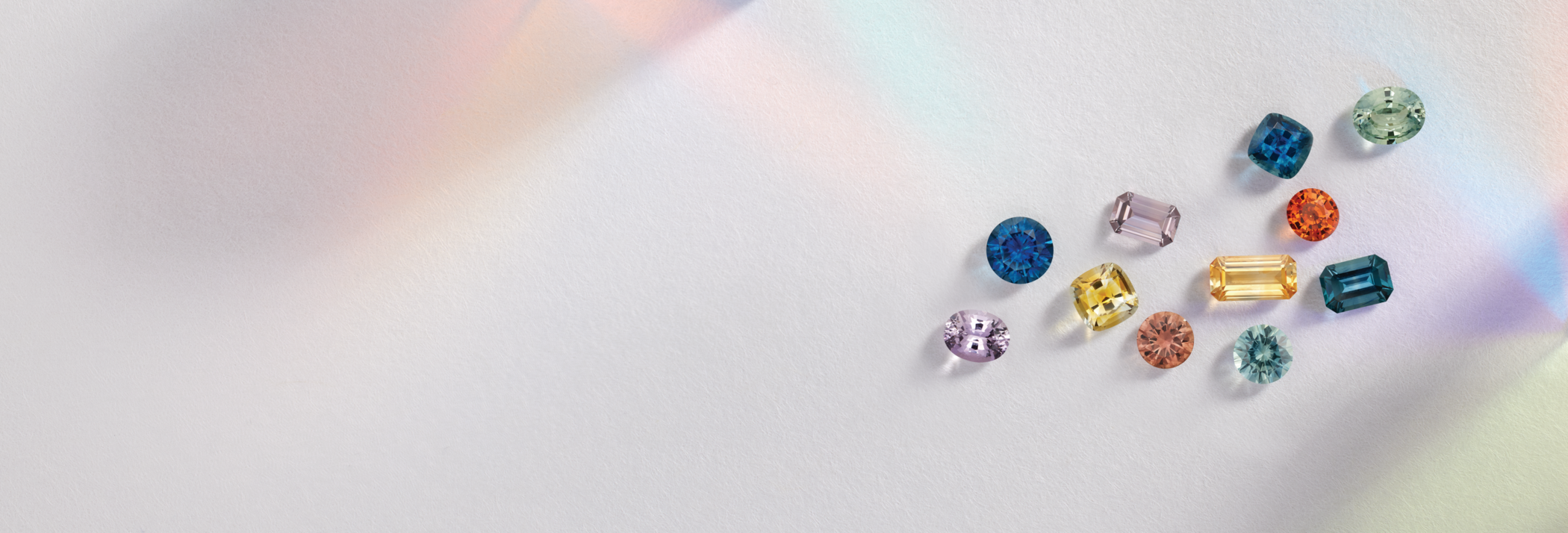
There are plenty of alternatives to diamonds for engagement stones!
Sapphire
Sapphire is the most popular diamond alternative for engagement rings, and for good reason. Best known for its rich blue color (though it comes in nearly every hue), sapphire ranks 9 on the Mohs hardness scale, just below diamond, making it an excellent choice for everyday wear. Its association with loyalty and enduring commitment makes it a fitting symbolic choice for an engagement ring specifically, and its royal history (famously worn by Princess Diana and now Kate Middleton) has only grown its popularity.
Durability: Excellent, well-suited to daily wear Best for: Buyers who want a durable, symbolically meaningful stone with timeless appeal
Moissanite
Moissanite is a lab-created stone that closely resembles diamond in appearance, with even greater brilliance and fire (the flashes of rainbow color you see as light hits the stone). It's significantly more affordable than diamond, allowing for a larger center stone on the same budget, and it ranks 9.25 on the Mohs scale, nearly as hard as diamond itself.
Unlike lab-grown diamonds, moissanite is chemically distinct from diamond (originally derived from silicon carbide), so it's considered a diamond simulant rather than an alternative diamond source.
Durability: Excellent, extremely well-suited to daily wear Best for: Buyers who want maximum size and sparkle at a more accessible price point
Morganite
Morganite is a soft pink to peachy-pink gemstone in the beryl family (the same mineral family as emerald and aquamarine). Its delicate, romantic color has made it increasingly popular for engagement rings, particularly in rose gold settings, which complement its warm tone beautifully.
Durability: Good, though softer than sapphire or moissanite, care should be taken to avoid hard impacts Best for: Buyers drawn to a soft, romantic color who don't mind slightly more careful wear
Emerald
Emerald offers a rich, saturated green with a long history of glamour and prestige. It's a striking, less conventional choice for an engagement ring. Emeralds naturally form with more visible inclusions than most gemstones (often called their "jardin," French for garden), which is considered part of the stone's character rather than a flaw, though it does mean emerald is more prone to chipping than harder stones.
Durability: Moderate, requires more careful wear and occasional professional care Best for: Buyers who want a bold, distinctive look and don't mind extra care for a ring worn daily
Ruby
Ruby offers a deep, vivid red with strong symbolic ties to passion and love, arguably the most fitting color association for an engagement ring of any gemstone. Ranking 9 on the Mohs scale, it shares sapphire's excellent durability (the two are actually the same mineral, corundum, in different colors).
Durability: Excellent, well-suited to daily wear Best for: Buyers who want a bold, romantic color with excellent everyday durability
Aquamarine
Aquamarine offers a soft, cool blue reminiscent of clear ocean water. It's a gentler, more understated alternative to sapphire's deeper blue, with good durability for a beryl-family stone, though still softer than sapphire or ruby.
Durability: Good, suitable for daily wear with reasonable care Best for: Buyers who want a light, airy blue with a calm, easygoing aesthetic
Lab-Grown Diamond
Worth mentioning here too: a lab-grown diamond isn't a diamond alternative in the traditional sense, it's chemically identical to a natural diamond, just grown in a lab rather than mined. For buyers who love the classic diamond look but want to explore alternatives to a natural, mined stone, this offers all the durability and brilliance of diamond, typically at a lower price point.
How to Choose the Right Alternative
A few questions to help narrow your options:
How important is everyday durability? Sapphire, ruby, and moissanite rank closest to diamond in hardness, making them the safest choices for a ring worn daily without much thought.
Do you want a specific symbolic meaning? Ruby and sapphire both carry strong ties to love and commitment; moissanite and lab-grown diamond are more about style and value than symbolism.
What's your color preference? Softer stones like morganite and aquamarine suit a delicate, romantic aesthetic; bolder stones like ruby, emerald, and deep sapphire make more of a statement.
How much sparkle matters? Moissanite and diamond offer the most brilliance; step-cut colored stones like emerald prioritize color and clarity over sparkle.
Why This Matters More for Custom Design
Choosing a colored stone often means moving away from a pre-made ring entirely, since colored center stones are far less common in ready-made inventory. Custom design lets you build a setting specifically suited to your chosen stone's color, shape, and durability needs, from the metal choice to the protective setting style.
Let's Find Your Stone
Whether you're drawn to a classic sapphire, a bold ruby, or something more unconventional, Bronz & Copper Co. can help you explore diamond alternatives and design a ring built around the stone that's right for you. Contact us today to get started!